

 United States
 United Kingdom
 Brazil
 Australia







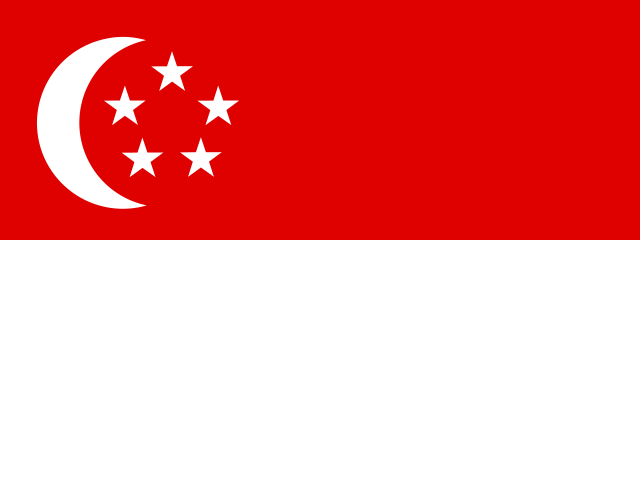



Casinos in Middle East
Where real-money and sweepstakes casino play stands in 9 live markets in Middle East, read separately on the same status scale — a market can be regulated for one and have no category at all for the other. Open any country for its regulator, its licensing rules and the sites licensed to serve it.
Of these, 5 carry a researched real-money position and none carries a researched sweepstakes one; the rest show a dash. Sweepstakes is largely a North American model, and this site has not established a position for it in most markets — so the column is mostly empty by honesty rather than by oversight.
Bahrain
Israel
Jordan
Kuwait
Lebanon
Oman
Qatar
Saudi Arabia
United Arab Emirates
More About Casinos by Country
Gambling Law Is National
There is no international licence for an online casino and no regional one either. The European Commission states that there is no sector-specific EU legislation in the field of gambling services, and that EU countries are autonomous in the way they organise their gambling services, as long as they comply with the fundamental freedoms established under the Treaty on the Functioning of the European Union, as interpreted by the Court of Justice of the EU. If the most integrated single market in the world has no common gambling law, nothing can be read across from one country to its neighbour. Each market is governed by its own statute and its own regulator, and that is the level at which this section records it.
A Licence Authorises One Market
The practical consequence is that a licence is a statement about a market, not about a company. The Gambling Commission says so in one sentence: a gambling licence issued in another country does not permit an operator to provide gambling to consumers in Great Britain. It adds that this applies regardless of where in the world the gambling is provided from, and that in the absence of a valid defence it is also a criminal offence to advertise unlawful gambling to consumers in Great Britain. Regulators elsewhere draw the same line from their own side. Sweden's Spelinspektionen states that a licence is required when offering gambling for money. The Malta Gaming Authority issues a business-to-consumer licence to offer or carry out a gaming service, and describes its own remit as regulating the sectors of the gaming industry that fall under the Authority. Singapore's Gambling Regulatory Authority states that it is unlawful for any person to provide unlicensed remote gambling services in or from Singapore, or from outside Singapore to persons situated in Singapore, and that Singapore Pools is the only operator it licenses for remote gambling. Four regulators, the same answer, and no licence that travels between them.
The Four Market Statuses
Each country on this site carries a status drawn from a fixed vocabulary, so that the same words mean the same thing on every page.
- Regulated — the market licenses online casino play and a named regulator oversees it. Great Britain, Sweden and Malta are examples, each with its own authority and its own conditions.
- Tolerated — play is permitted in practice, or reached from outside, with no full domestic framework in place.
- Grey market — no route exists for an operator to hold a licence for this market, so nobody serving it holds a local one. Three shapes carry that label here. A gaming law exists but creates no licensing category for online casino play, which is Bolivia: its law contemplates delivery by digital means, its authority publishes a list of authorised games with no online category, and that authority treats unauthorised online sites as illegal. A framework exists and its gaming licences have not opened yet, which is Ireland: the Gambling Regulation Act 2024 created a remote gaming licence, and the Gambling Regulatory Authority of Ireland is opening licence types in stages that gaming is not yet in. Or the question is not decided nationally at all, which is sweepstakes in the United States, where there is no federal position and our United States page records the state-by-state picture, several states prohibiting it outright. Grey is a statement about licensing, and nothing more. It is never an assurance that play is lawful where you are — for that, read the country page.
- Prohibited — it is banned under current law. Singapore is an example, with its regulator stating the prohibition and the single licensed exception.
A fifth value, not applicable, is reserved for the case where a source states that a model does not exist as a category in that market. It is a claim and is used as one. Where no primary source addresses a market at all, the status is left unset: null means not researched, renders as a dash, and asserts nothing. Status is stored per vertical, so real-money casino and sweepstakes carry separate values, each with its own regulator, source references and last verified date, and neither is ever inferred from the other.
What the Status Decides on the Page
The status is not decoration; it determines which operators a country page may list. A regulated market lists only that regulator's licensees, because a licence from elsewhere does not authorise service there. A grey or tolerated market lists operators licensed elsewhere and accepting players from that country, labelled as such and never described as holding a local licence. A prohibited market lists nobody. Operators without a working visit link are not listed in any market. The country list itself, and the operator list on each country page, are generated from the database rather than written into this page, so a licence change or a status change updates the site rather than ageing inside a paragraph.
The United States Is Read at State Level
One market cannot be settled at country level. In the United States, online casino law is made by the states, and federal law points back at state law rather than displacing it: the Unlawful Internet Gambling Enforcement Act defines unlawful internet gambling in terms of a bet or wager that is unlawful under any applicable Federal or State law in the State or Tribal lands in which the bet or wager is initiated, received, or otherwise made, and expressly carves out a bet initiated and received or otherwise made exclusively within a single State where it is expressly authorized by and placed in accordance with the laws of such State. The Michigan Gaming Control Board puts the default plainly: gambling is generally illegal in Michigan unless it is specifically authorized by state law. The per-state position is tracked in its own section of this site.
Nothing on this site is legal advice. Where a market's status matters to a decision you are making, check the position under your own local law.